
The City Council voted 31 to 20 today to pass City of Yes, a historic housing plan that will rezone New York City and allow denser development.
Modifications that were made to Mayor Eric Adams’s plan through the Council’s City for All housing initiative, which added $5 billion in investment for affordable housing development and preservation, among other programs, were critical to gaining support for the proposal from many Council members.
The final proposal aims to create over 80,000 new housing units over 15 years. The initial plan set a goal of up to 109,000 units.
A call to action
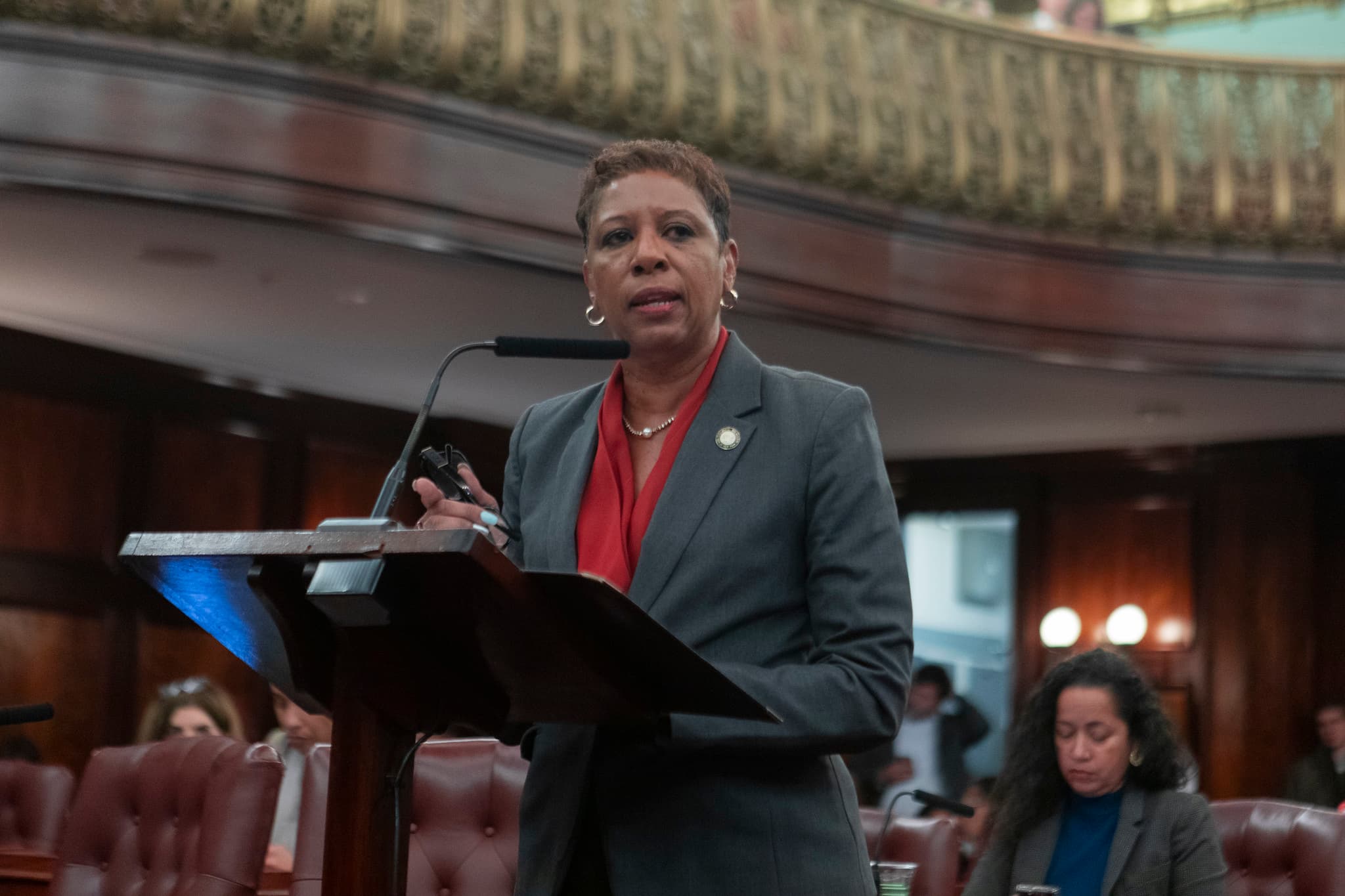
In an address to council members prior to the vote, Speaker Adrienne E. Adams said, “This proposal, when delivered to us, was not perfect, and is not perfect today." But if they rejected the plan they would be "turning their backs" on the city's housing crisis, she added. She urged members who were opposed to recognize the changes Council members had made to the mayor’s plan.
Council members also addressed the chamber, including some who represent transit deserts where residents rely on cars and oppose the removal of parking mandates for new construction. Other members in flood-prone neighborhoods were concerned that their infrastructure is too overloaded to support new development.
$5 billion investment
In November, the land use committees approved the modified version of the proposal, adding investment through a $4 billion commitment from the city and $1 billion from the state for infrastructure and affordable housing programs, as well as funding for repairs for NYCHA buildings, senior and supportive housing, and mandating deeper affordability for low-income households.
Loading ad...
Three zones for parking
The modified version addressed the biggest sticking point by creating three geographic zones for parking requirements for new construction. There are no parking mandates for Zone 1, which includes Manhattan except Inwood, Long Island City, parts of Western Queens and Brooklyn; and reduced parking requirements in Zone 2. Parking mandates will be maintained for Zone 3, which are areas where residents depend on cars to get around.
Large development projects that take advantage of the Universal Affordability Preference program would be required to dedicate 20 percent of their total affordable units to individuals with incomes below $44,000 and families of four with incomes below $62,000.
New deep affordability option
For individual rezoning proposals that require Council approval, there will be a new deep affordability option that would require 20 percent of the affordable housing to be available at the deepest affordability levels for New Yorkers living at or below 40 percent of the AMI, targeting incomes between $40,000 and $70,000, a shift from 60 percent AMI.
City of Yes called for accessory dwelling units or ADUs to be newly permitted, but concerns about flooding prompted the committees to prohibit ground-floor and basement ADUs in flood-prone areas, as well as several types of backyard ADUs.