
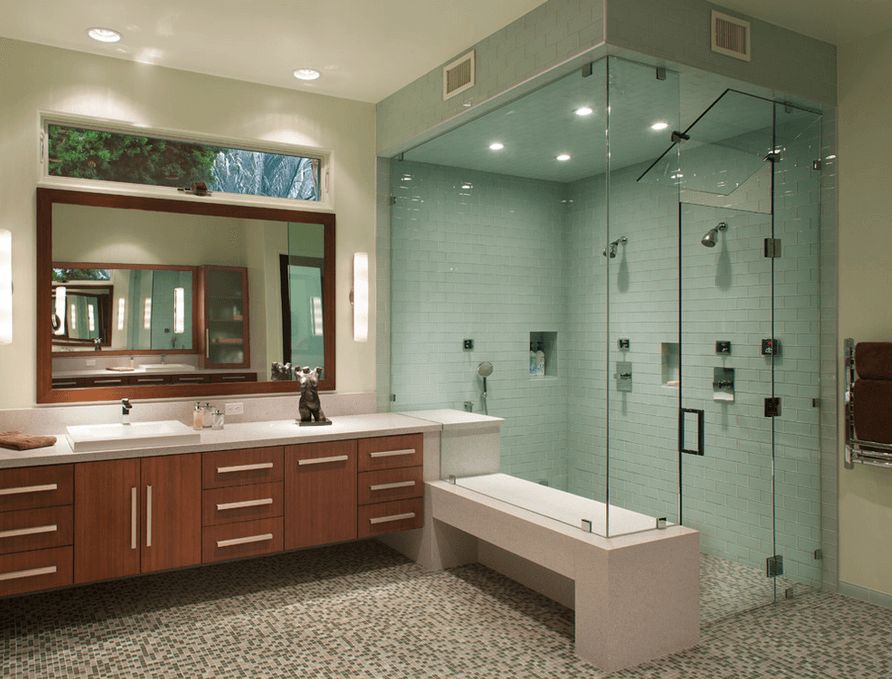
Q. I'm remodeling the bathroom in my Brooklyn co-op, and planning to install a free-standing steam shower. The problem is, there's a window on the wall where I want to put it. Is it okay to cover it up, or is there a law that says that every bathroom needs a window?
A. While there's no law that says a bathroom must have a window, the room does need a mechanical vent installed to reduce moisture and potentially hazardous fumes from cleaning products, according to Aaron Shmulewitz, a real estate attorney at Belkin Burden Wenig & Goldman.
If the bathroom doesn't already have a vent, you'll have to add one and either run it through the opening formerly occupied by the window or to another vent in the apartment, like in the kitchen, says Ben Pitt, a remodeling consultant with My Home, a New York City design firm. "This would have to be approved by both the building and filed with the Department of Buildings," he adds.
But before you brick up that window, consider that getting your co-op board to approve the project will be a colossal hassle, Shmulewitz says. Boards are loath to approve work that involves altering the facade of the building. "At a minimum, you'll be dancing with the board forever on this, and then if they do ever allow it, they will likely impose a ton of conditions and restrictions," Shmulewitz says. "They will take into consideration structural issues, fire safety, etc."
Additionally, it may not be the wisest investment when it comes time to sell your place. "A steam shower may be attractive to some, but a window in a bathroom is going to be more attractive to at least as many potential buyers," he cautions.
That said, there's a simpler and cheaper approach: "Have a custom glass fabricator create a glass enclosure to cover or seal the window niche with some type of access to the window itself, kind of like a storm window," Pitt suggests. "This would preserve light and avoid costly filing expenses."
Loading ad...
In this case, you’d be sealing up the window from the inside only—meaning you won't be touching the exterior of the building.
Related: