
An exquisite if rarely discussed New York City pleasure is finding out that the insect you discovered on your mattress is not, in fact, a bed bug.
In the last few years, bed bug false alarms have become a bigger feature of the local pest control business, as New Yorkers have gotten more educated about the critters—and more aggressive about calling exterminators at the first sign of a problem, experts say.
John Furman, founder of Boot-A-Pest, a company that specializes in bed bug control, estimates that 80% of people who call him about bed bugs don’t have them, up from about 60% three or four years ago. Standard Pest Management had 59 fewer cases of responding to live bed bugs in 2013 and 68 more visual inspections over the previous year, says president Gil Bloom.
“Things are getting treated earlier,” Bloom says. “There’s less spread.”
Preliminary city-wide numbers bear that out: in 2013, there were about 8,500 bed bug complaints received by the city Department of Housing Preservation & Development, a 19% decline from 2012, according to Bloom.
If you find a suspicious looking bug, use these strategies to make sure you're not freaking out unnecessarily:
Compare your insect to these photos
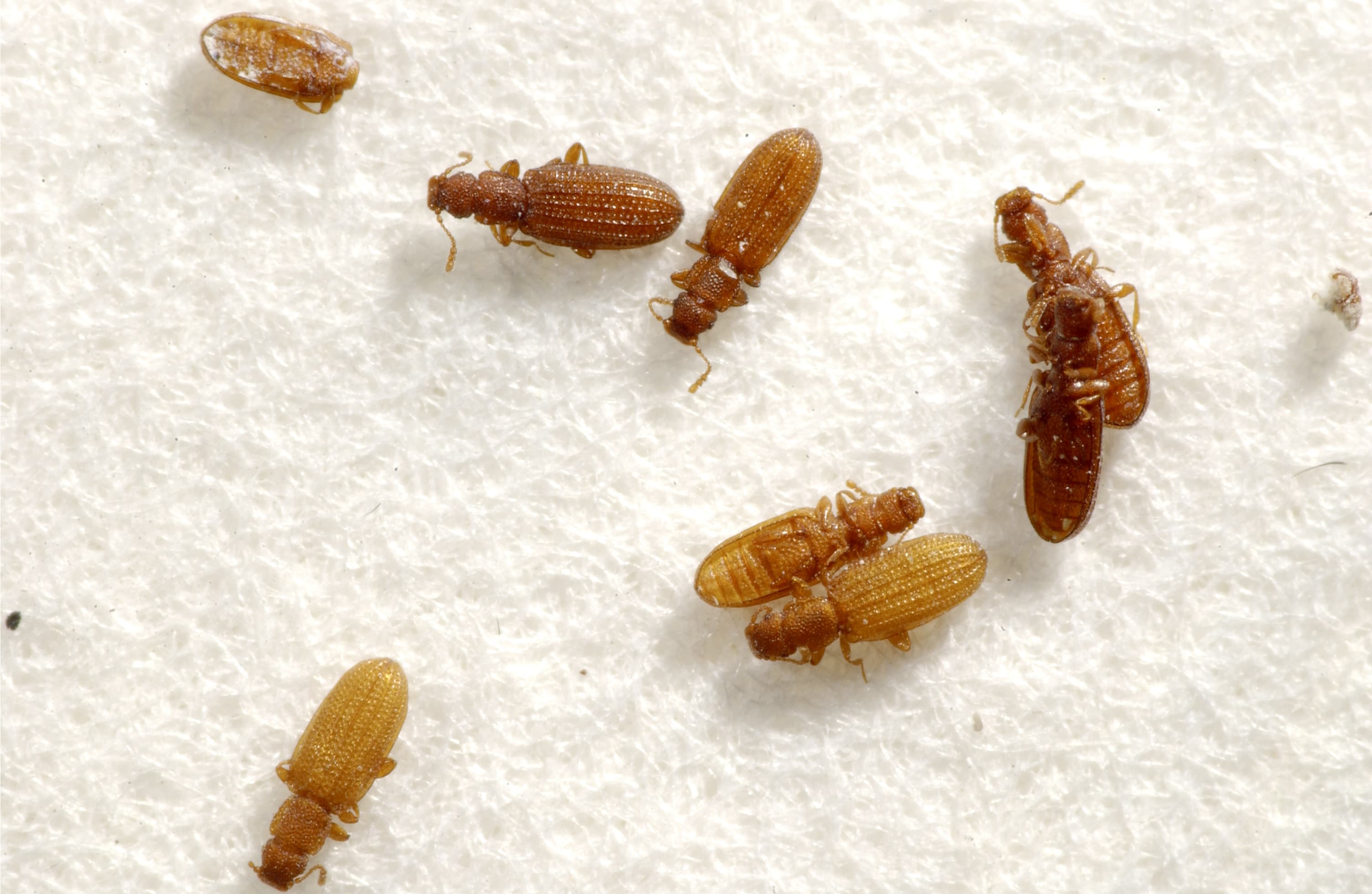
This photographic menagerie of beetles, cockroaches, lice and other insects is from Louis Sorkin, a scientist at the American Museum of Natural History and consulting entomologist at Entsult Associates, who snapped these pictures as part of his work identifying bed bugs.
Loading ad...
None of the insects pictured is a bed bug--but all of them are species that amateurs frequently mistake for bed bugs.
Send a sample
The best way to diagnose a bed bug attack is to send a sample insect to an exterminator so they can evaluate it or send it to a lab for verification, says Michael Bohan, a vice president at pest control firm Assured Environments. At Assured, you can overnight your specimen to their offices, or they’ll send a messenger to pick it up free of charge, he says.
Take a photo
The next best way to identify your bug is to send a photo. Exterminators routinely screen potential infestations through photographs, often for free. “My truck doesn’t get rolling until I see evidence via photograph in my email,” Furman says.
Indeed, more than half of all bugs can be identified from a photo, at least to the extent of determining the next step--an all clear or an in-person investigation, Bloom says.
To ensure an accurate identification:
- Send at least two photos, one with a clear picture of the insect and another next to a dime or ruler for scale, says Bloom. Often, customers “will put it in next to a dime, and the camera automatically will focus on the dime and blur the bug," he adds.
- Take the photo on non-textured, white paper, Bloom says. If the bug is on a marble kitchen counter, for example, it’s difficult to distinguish the bug from the background.
Related posts:
Loading ad...